Tennis Elbow: Symptoms, Treatment and Recovery
Despite the name, most people with tennis elbow have never picked up a racket. Here is what causes it and what helps.
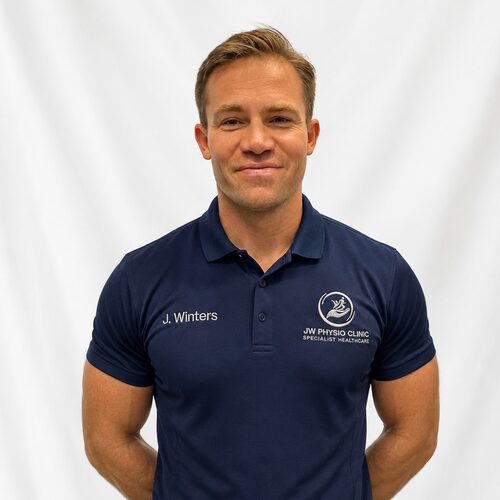 Written by John Winters, HCPC-registered physiotherapist (PH114616)
Last reviewed 28 October 2026
What Is Tennis Elbow?
Tennis elbow, also called lateral epicondylalgia, causes pain on the outer side of the elbow. It is related to the tendons that attach the forearm extensor muscles to the bone, which are used when you grip, lift and twist the wrist. It is usually considered an overload problem of the tendon rather than a simple inflammation, which is why treatment focuses on loading the tendon appropriately.
Who Gets It?
Tennis players can develop it, but it is much more common in people whose work or hobbies involve repetitive gripping and wrist movements, such as using tools, typing, lifting, painting, gardening or racket sports. It most often appears between about 35 and 55, though it can occur at any age.
Typical Symptoms
- Pain on the outside of the elbow, sometimes spreading into the forearm
- Pain when gripping, lifting a kettle, shaking hands or turning a door handle
- Tenderness over the bony bump on the outside of the elbow
- Stiffness or weaker grip because of pain
What Helps?
Tendon problems tend to respond to a structured approach:
- Relative rest: reducing the activities that provoke pain, rather than stopping completely
- Progressive strengthening of the forearm muscles, which is the core of most rehabilitation
- Adjusting how you work or play, such as changing grip, tools or technique
- Hands-on treatment and dry needling for some people
- Bracing or straps, which may give short-term relief for some
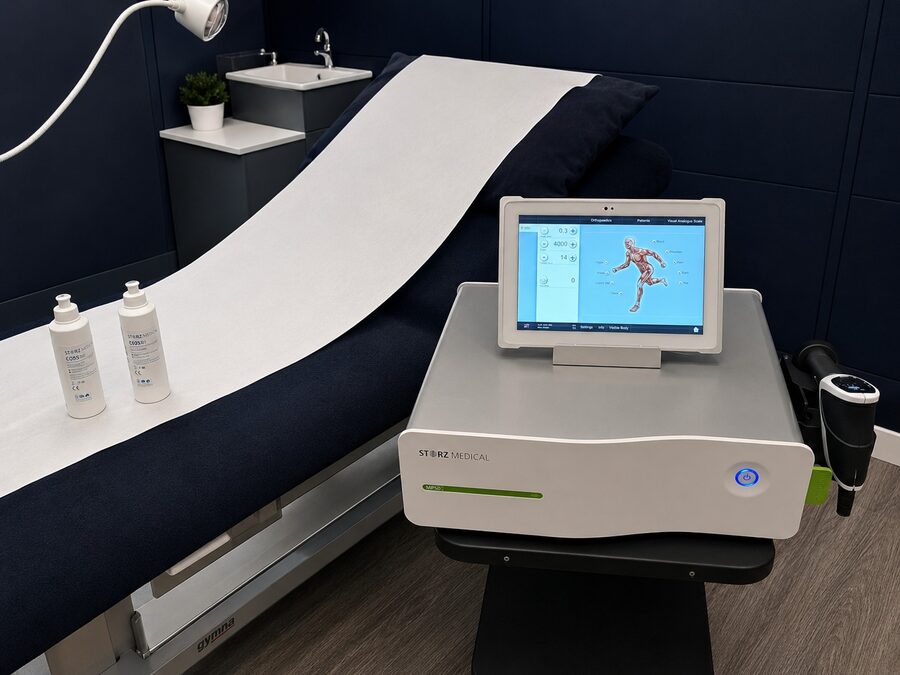
- Shockwave therapy for stubborn cases, as part of a wider plan
- Injections, which may be considered in selected cases, although some evidence suggests longer-term outcomes may not be better than other approaches
How Long Does Recovery Take?
Tennis elbow can be slow to settle. Many cases improve over several months, and some take a year or more, though most people improve with the right loading. It is common to feel progress and setbacks along the way. Sticking with the exercises matters.
When to Get It Assessed
Book an assessment if pain has lasted more than a couple of weeks, is interfering with work or sleep, or has followed an injury. Elbow pain can come from other sources, including the neck, so a proper examination is worthwhile. Seek urgent help if the elbow is hot, swollen and you feel unwell, or if you have an injury with deformity.
Changing How You Load the Elbow
Small adjustments can make a difference. Try keeping your wrist in a neutral position when gripping, using larger-handled tools that reduce grip effort, lifting objects with your palm facing up rather than down and carrying bags close to the body. Racket sport players may benefit from checking grip size, string tension and technique with a coach.
A Typical Rehabilitation Pattern
- Early phase: reduce provoking activities, keep the arm moving gently and begin simple isometric exercises that put the tendon under load without much movement
- Building phase: progress to strengthening through range, such as wrist extension and gripping exercises, increasing resistance gradually
- Return phase: introduce the specific demands of work or sport in a controlled way
Your clinician will adjust the plan based on how you respond, and the process is often measured in weeks to months.
Other Causes of Outer Elbow Pain
Pain on the outside of the elbow may also arise from the neck, the radial nerve, the elbow joint itself or other tendons. If your symptoms do not fit the usual pattern, if you have numbness or tingling, or if the pain is not improving as expected, further assessment is worthwhile.
Getting Started
We assess and treat tendon problems at our Loughton clinic. You can book without a referral, and we will build a plan that fits your work and activities.
Frequently Asked Questions
No. Complete rest is rarely helpful. The aim is to reduce provoking activities while gradually strengthening the tendon.
It varies. Many cases improve over a few months, and some take longer. Consistent rehabilitation helps.
A strap or brace may give short-term relief for some people, but it is not usually a stand-alone solution.
It may be considered in selected cases, but injections do not address the cause and may not give better long-term results than exercise. Discuss the pros and cons with your clinician.
Talk to the JW Physio Clinic team
Book an appointment at our Loughton clinic. No GP referral is needed, and same-week appointments are usually available.
Book an Appointment Sports injury clinic in LoughtonRelated Reading
- Dry Needling vs Acupuncture: What Is the Difference?
- Physiotherapy vs Ultrasound-Guided Injection: Which Do You Need First?
- Plantar Fasciitis: Causes, Treatment and Recovery
This article is general information and is not a substitute for an individual assessment. If you are worried about your symptoms, speak to a healthcare professional.
Elbow Pain Assessment
Get a clear diagnosis and a plan for your elbow.
Book an Appointment Call 02031 466 837 Text Us