Plantar Fasciitis: Causes, Treatment and Recovery
Stabbing heel pain with your first steps in the morning is a classic sign. Here is what is going on and what helps.
 Written by John Winters, HCPC-registered physiotherapist (PH114616)
Last reviewed 28 October 2026
What Is Plantar Fasciitis?
The plantar fascia is a thick band of tissue running along the sole of the foot from the heel to the toes. It helps support the arch and absorb load when you walk or run. Plantar fasciitis is a common term for pain in the heel and underside of the foot linked to this tissue. Some clinicians prefer terms such as plantar heel pain, because inflammation may not be the whole story.
Typical Symptoms
- Pain under the heel, often sharp, on the first steps after getting out of bed or after sitting for a while
- Pain that eases after a few minutes of walking but can return later in the day
- Tenderness when pressing on the inside of the heel
- Pain that is worse after increasing walking, running or standing
Common Contributing Factors
There is rarely a single cause. Contributors may include a sudden increase in activity, prolonged standing, hard surfaces, unsupportive footwear, tight calf muscles, reduced ankle movement, higher body weight and foot structure. Understanding what applies to you helps guide treatment.
What Can Help?
Most people improve with a combination of measures:
- Reducing or adjusting the activities that aggravate the heel, rather than stopping everything
- Calf stretching and strengthening, and exercises for the foot
- Supportive footwear, and cushioned heel inserts or orthotics for some people
- Load management, such as building walking or running back up gradually
- Hands-on treatment to ease tight tissue
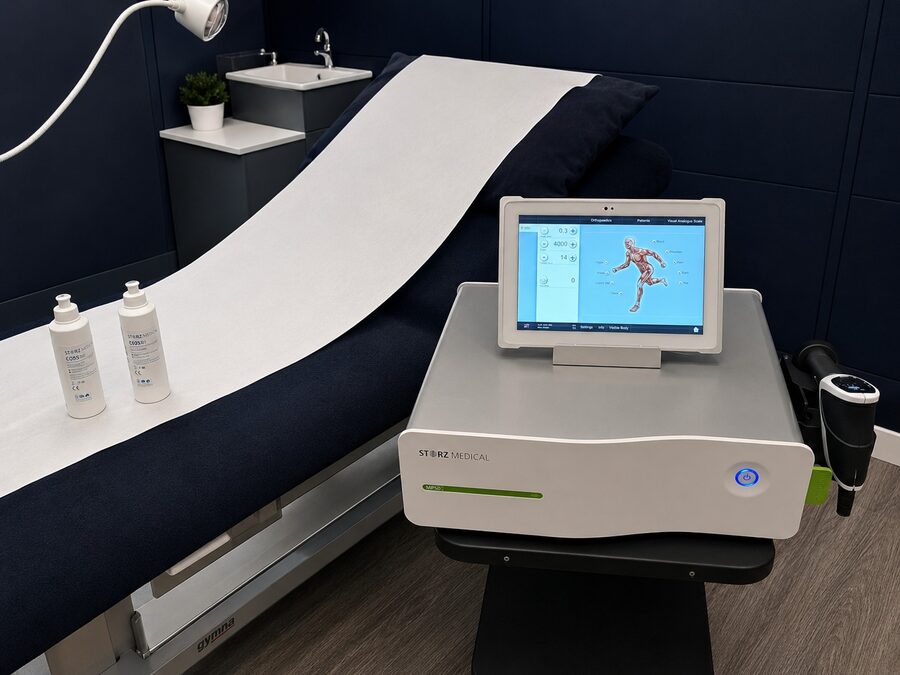
- Shockwave therapy for persistent cases, as part of a wider plan
Our foot and ankle service, orthotic insoles service and shockwave therapy may all play a role, depending on your assessment.
How Long Does It Take?
Recovery can be slow. Many people see improvement over weeks to months, and some cases take longer, especially when symptoms have been present for a long time. Consistency with exercises and sensible load management matters more than any single treatment.
When to Get It Checked
See a physiotherapist or your GP if the pain has lasted more than a few weeks, is getting worse, follows an injury, comes with numbness, tingling or swelling, or stops you walking normally. Other problems can mimic plantar fasciitis, so a proper assessment is worthwhile.
Simple Exercises Commonly Used
Your physiotherapist will tailor exercises to you, but programmes often include:
- Calf stretches, held for a comfortable period and repeated through the day
- Calf raises, progressed slowly, because strong calves reduce load through the foot
- Plantar fascia loading exercises, such as raising the heel with the toes lifted
- Rolling the sole of the foot over a ball for comfort
- Foot-strengthening exercises, such as gently gripping a towel with the toes
Do not push into sharp pain, and ask your clinician to check technique and progression.
Footwear and Everyday Tips
- Choose supportive shoes with some cushioning, and avoid walking barefoot on hard floors if it aggravates the heel
- Replace worn running shoes
- Avoid sudden increases in standing, walking or running
- Break up long periods on your feet when you can
Other Causes of Heel Pain
Not every heel pain is plantar fasciitis. Other possibilities include a stress reaction in the heel bone, a fat pad problem, nerve irritation, Achilles tendon problems and, less commonly, inflammatory conditions. If pain is severe, follows an injury, wakes you at night or does not respond to sensible measures, get it examined.
Getting Started
You can book a foot and ankle assessment with us in Loughton without a referral. We will look at how you stand, walk and load your foot, and build a plan you can follow.
Frequently Asked Questions
After rest, the tissue under the heel tightens and the first steps load it suddenly. Pain often eases as you move, then may return after prolonged activity.
Reducing aggravating activity can help, but complete rest tends not to resolve it. Gradual loading and exercise are usually part of recovery.
They help some people, particularly alongside exercises and sensible footwear. Whether they are suitable depends on your assessment.
Shockwave may be considered for persistent heel pain that has not improved with other measures. It is usually combined with exercise and load management.
Talk to the JW Physio Clinic team
Book an appointment at our Loughton clinic. No GP referral is needed, and same-week appointments are usually available.
Book an Appointment Foot and ankle physiotherapy in LoughtonRelated Reading
- Returning to Running After Injury: A Gait Analysis Guide
- Tennis Elbow: Symptoms, Treatment and Recovery
- Knee Pain: When to See a Physio and What Helps
This article is general information and is not a substitute for an individual assessment. If you are worried about your symptoms, speak to a healthcare professional.
Heel Pain Assessment
Persistent heel pain? Get a proper assessment and plan.
Book an Appointment Call 02031 466 837 Text Us