Hip Pain: Causes, What Helps and When to See a Physio
Hip pain can start in the joint, the tendons around it or the lower back. Where you feel it gives useful clues.
 Written by John Winters, HCPC-registered physiotherapist (PH114616)
Last reviewed 9 November 2026
Where Is Your Hip Pain?
The location of the pain gives clues about the cause, although it is not a firm diagnosis.
- Outer side of the hip: often tendon-related, particularly the gluteal tendons, sometimes called hip bursitis. It is often worse lying on that side, climbing stairs or after walking.
- Groin or deep front of the hip: often linked to the joint itself, such as osteoarthritis or hip impingement, or to a groin strain.
- Buttock: may come from muscles around the hip, or be referred from the lower back.
- Pain travelling down the thigh: may be referred from the spine or from nerves.
Common Causes
- Tendon irritation at the outer hip
- Hip osteoarthritis
- Femoroacetabular impingement, where the shape of the joint leads to pinching
- Groin and adductor strains, common in football and running
- Hip flexor tendon pain
- Referred pain from the lower back or sacroiliac joint
- Pain after hip surgery, such as a replacement
What Helps at Home
- Reduce activities that clearly aggravate the pain, rather than stopping everything
- Keep walking at a comfortable level
- Avoid crossing your legs or sitting in very low seats, if they aggravate it
- Sleep on your back with a pillow under the knees, or on your unaffected side with a pillow between the knees
- Try gentle hip movement and strengthening once pain allows, ideally with guidance
- Build activity back up gradually
Warning Signs: When to Seek Urgent Help
Seek urgent medical help if you cannot weight-bear after a fall, the leg looks shortened or rotated, you have severe sudden pain with fever or feeling unwell, the hip is hot, red and swollen, or you have numbness around the groin or loss of bladder or bowel control.
When to See a Physio
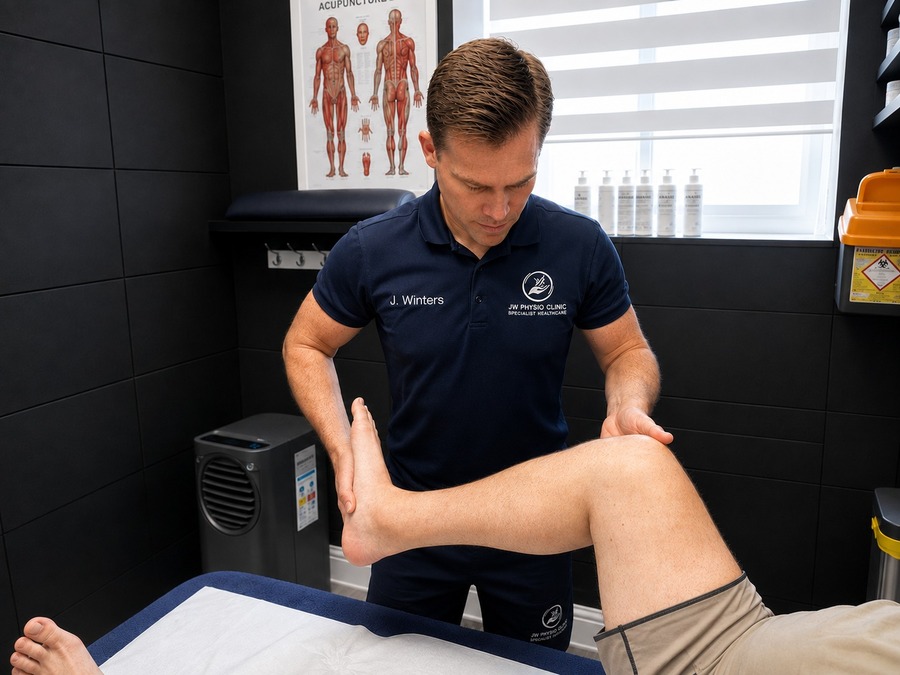
Consider an assessment if your hip pain has lasted more than a couple of weeks, is limiting walking or sleep, keeps returning, or if you are unsure where it is coming from. A physiotherapist will examine your hip, back and pelvis, explain the likely cause and start treatment.
What Treatment Involves
Treatment depends on the cause, but commonly includes hands-on therapy, progressive strengthening of the hip muscles, advice on load and activity, and rehab for running or sport. For persistent tendon pain, dry needling or shockwave may be used alongside exercise. If there is arthritis or a surgical question, we can advise on scans and onward referral.
Hip Pain and Surgery
If you are waiting for a hip replacement, strengthening and conditioning beforehand may help your recovery. After surgery, structured rehab is an important part of regaining strength and walking. We follow your surgeon's protocol.
Hip Pain in Runners and Active People
Running places repeated load through the hip, and tendon and groin problems are common when training load rises suddenly. If you run, check your recent mileage, speed work and hills, build up gradually and include strength work for the glutes and hips. If pain builds during runs, changes how you move or lingers the next day, reduce the load and get it assessed.
Hip Pain in Older Adults
Hip pain is common as we age, and arthritis is a frequent cause, but not the only one. Staying active, maintaining leg strength and using appropriate walking aids can help. Sudden pain after a fall, or inability to take weight, needs urgent assessment, as it may indicate a fracture.
Frequently Asked Questions
Pain on the outer hip when lying on that side is often related to irritated tendons at the side of the hip, sometimes called hip bursitis. A physiotherapist can confirm this.
No. Hip pain has several causes, including tendon problems, groin strains, impingement and pain from the lower back. Arthritis is one of them.
For many people, walking at a comfortable level is helpful. If it significantly worsens your pain, get it assessed.
Not usually at first. We will advise if imaging would help.
Talk to the JW Physio Clinic team
Book an appointment at our Loughton clinic. No GP referral is needed, and same-week appointments are usually available.
Book an Appointment Hip pain treatment in LoughtonRelated Reading
- Osteoarthritis of the Knee and Hip: What Physiotherapy Can (and Can't) Do
- Prehab: Why Physiotherapy Before Surgery Can Help Your Recovery
- Lower Back Pain: Causes, Self-Care and When to See a Physio
This article is general information and is not a substitute for an individual assessment. If you are worried about your symptoms, speak to a healthcare professional.
Hip Pain Assessment
Same-week appointments are usually available. No GP referral needed.
Book an Appointment Call 02031 466 837 Text Us